by Adama DIENG (*)
On January 1, 1804, a date that was to mark the epilogue of an epic and historic revolution against the French colonial authorities, Haiti proclaimed its independence under the leadership of Jean-Jacques Dessalines. Formerly Santo Domingo, “Haiti”, the “land of mountains” in the Taino language, thus became the first independent black nation in the Western Hemisphere, and much later, a founding member of the United Nations, Organization of American States, Association of Caribbean States, and the International Organization of La Francophonie.
219 years later, exactly on January 1, 2023, an opinion entitled “Taken hostage, Haiti is dying. Let’s take action now” which I had initiated was published. I sincerely thank the eminent personalities from the five continents who joined and co-signed this Op-Ed, among them current and former Heads of State, the Chairperson of the African Union Commission, and renowned intellectuals.
More than a year after the Op-Ed was published, one wonders if the cry from the heart that we launched was clearly heard. This is because since then, the situation in Haiti has profoundly deteriorated and become much more desperate. Notwithstanding, recognition, appreciation, and encouragement should be proffered to all the entities and personalities, such as UN Secretary-General António GUTERRES, and the Government of the Republic of Kenya under the leadership of President William RUTO, who have since then committed to further support the people of Haiti in this most difficult hour of their need. Last October, the UN Security Council authorized the deployment to Haiti of a multinational mission led by Kenya to try to restore order in the face of spiraling gang violence and breakdown of law and order. However, this deployment, already delayed by a Kenyan judicial process, could be made more challenging by political complications and realities in Haiti itself. Antigua and Barbuda, The Bahamas, Bangladesh, Barbados, Chad, and Jamaica formally notified the United Nations of their intent to contribute personnel to an international force. The Caribbean Community (CARICOM) has deployed remarkable efforts in favor of peace in Haiti. Furthermore, the most recent development seems to indicate that the Government of Benin, under President Patrice TALON, would also be ready to commit its forces to contribute to the stabilization of the Caribbean country which is so emblematic for many African nations. This is because Haiti, a land immersed in African traditions, is intrinsically linked to Africa through history, culture and spirituality.
Why is effective and rapid international action so tragically overdue when a victimized population is suffocating, and when there is a chance, however complex it may be, to turn the situation around? Humanity must heed and respond to the cries of the people of Haiti. The Prime Minister of Haiti, Ariel Henry, announced his resignation a few days ago. The international community is calling for the establishment of a transitional government that could free the country from violence.
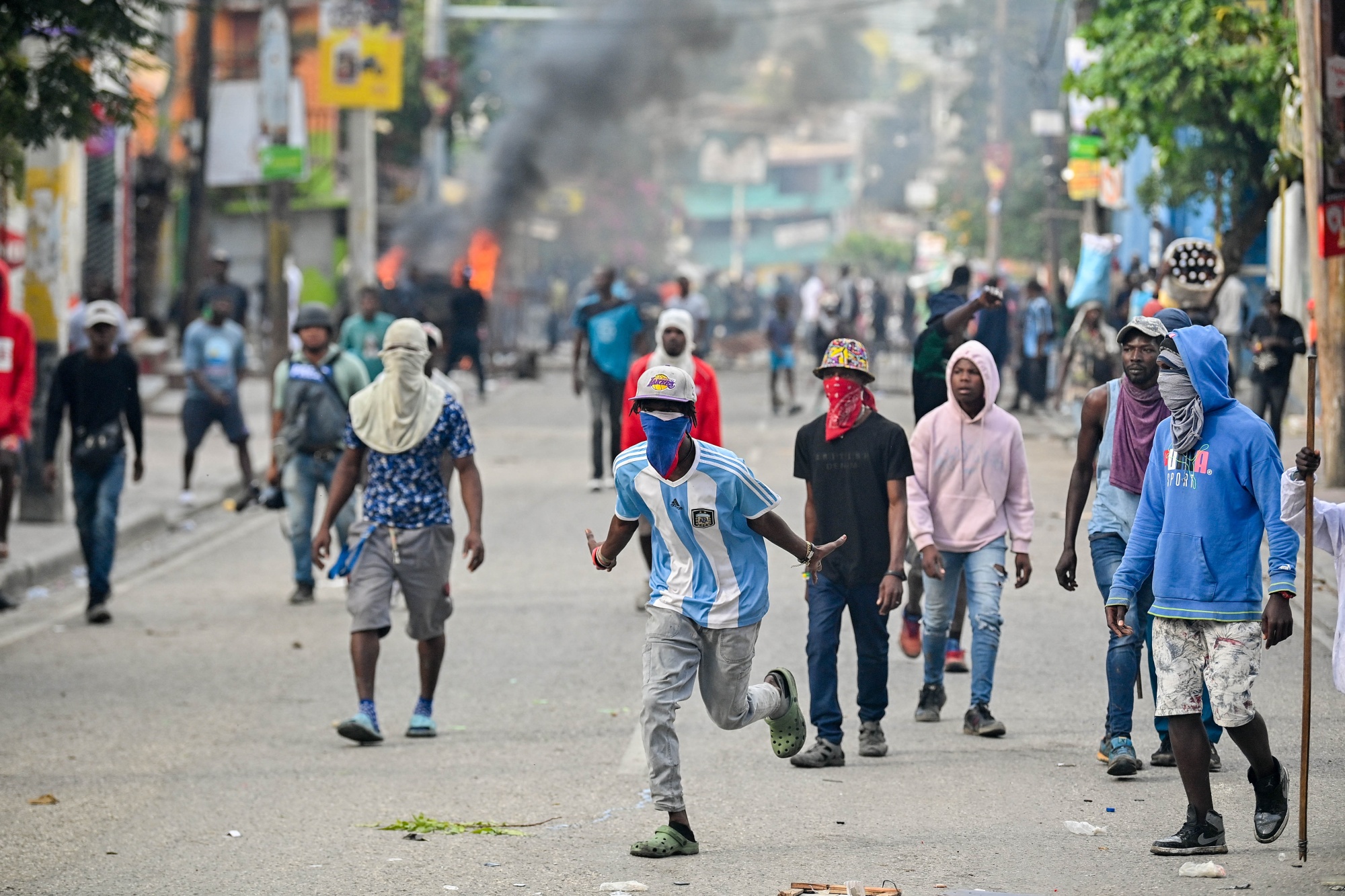
For a ruined and overwhelmed country, whose basic services to support people’s existence including hospitals, schools and businesses have collapsed, criminal gangs control most of the capital while people are desperately trying to escape and seek sanctuary in neighbouring countries; for a country where access to the main airport is blocked; its presidential palace and police stations were stormed; for a country whose two main prisons were attacked, leading to the flight of more than 4,000 prisoners; for a member of the family of nations, perhaps one of the most fragile, bleeding before us all with a high risk of genocide or a fully-fledged civil war; for Haiti, continuing inertia or hesitation would be tantamount to a crime of non-assistance. The Transition Council that the international community is calling for will hopefully be composed of personalities from the main political parties, the private sector, civil society and religious groups. But none of the leaders has a legitimate mandate. Some are even under United Nations sanction; they are all very divided; others were charged at home and abroad with very serious crimes.
The heroic Haitian people, bruised a thousand times, betrayed on many occasions, deserve more and better, despite the complexity of the prevailing situation. The Pan-African Alliance for Transparency and Rule of Law (PATROL), whose objective is to foster Transparency and the respect for the Rule of Law and to act as an engine for development, is ready to use its good offices and serve as a communication channel in order to facilitate rapprochement between the various parties in Haiti. The Board of Directors, our organization’s central governing body which is made of leading personalities in transparency, justice and rule of law reforms, governance and human rights from around the world, has confirmed that PATROL stands ready to play a catalytic and advisory role in furthering justice reforms that are compatible with and adapted to the national justice system and culture of Haiti. We want to listen and be available to the Haitian people – Haitians at home and those in the diaspora- and serve all parties wishing to work for a return of stability and the restoration of credible and legitimate governance institutions.
More specifically, PATROL would be honored to humbly contribute to the future of Haiti to strengthening the criminal justice system, fighting impunity and corruption, improving the prison system, and supporting security and human rights. It is time to act without political or geopolitical calculations. To this effect, PATROL is ready to engage and work with local and international partners to further and achieve these objectives.
Haiti has survived the deep torments of the transatlantic slave trade. Haiti has survived the tremendous ravages of both nature and human induced calamities such as earthquakes, disproportionate deforestation, abject poverty and destitution, weak and in some cases absent governance institutions, political instabilities, and dire humanitarian conditions, including an epidemic of cholera imported into the country. Haiti, a nation blessed with magnificent authors, poets, great artists and musicians has also survived gangs, sexual violence, and orgies of violence. Haiti has continued to survive from recurring nightmares. What this wonderful people, this extraordinary land will not survive is the lack of effective action, another betrayal of epic proportions. Humanity must act and act quickly to support the people of Haiti, to reclaim their country premised on justice, equity, and social economic progress. Let’s genuinely, generously, and courageously help Haitians reclaim their destiny and live in peace.
Indeed, we could all be guilty of failing to assist this remarkable people in danger.
For the “Pearl of the Antilles”, humanity has the means to ensure that this is not wishful thinking.
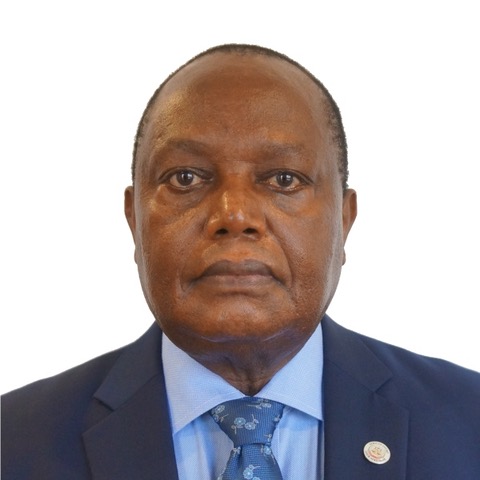
*Adama DIENG
Founding President of PATROL
Former United Nations Under Secretary-General/Special Adviser on the Prevention of Genocide.
Former Independent Expert on the Situation of Human Rights in Haiti.
Former Registrar of the International Criminal Tribunal for Rwanda.
Former Board member of the International Institute for Democracy and Electoral Assistance.